





Oasis Fertility Hosts Janani Dialogues in Bhubaneswar, Announces Oasis Academy to Strengthen India’s Fertility Care Ecosystem
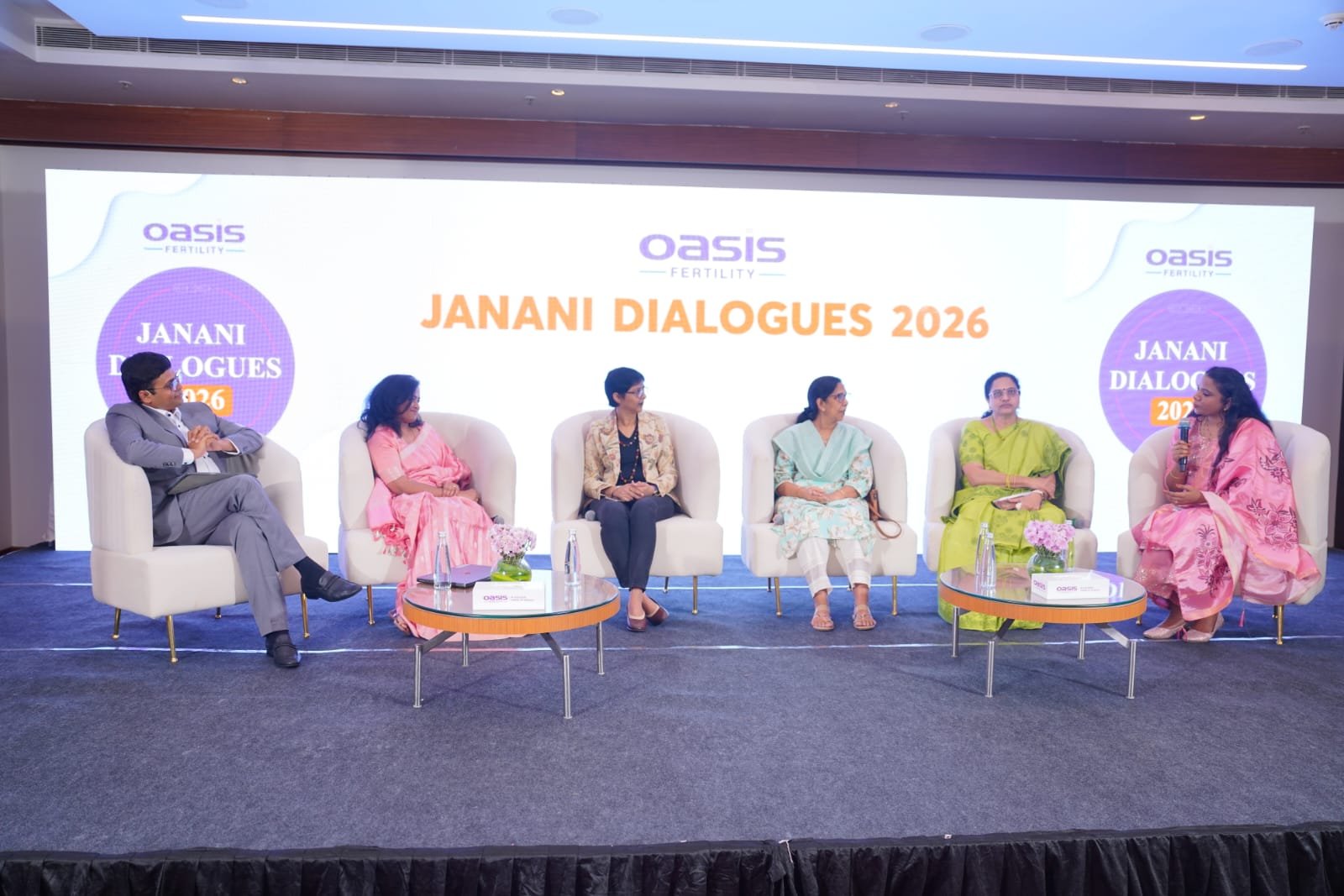
Bhubaneswar, 23 July 2026 — Oasis Fertility today hosted the Bhubaneswaredition of Janani Dialogues, a public-interest forum on reproductive wellbeing, preventive awareness and informed family building.
Themed “The Parenthood Paradox: Building a Family-Friendly India,” the forum brought together healthcare professionals, referring clinicians and community stakeholders in Bhubaneswar to examine a question increasingly on India’s mind: what does it take to build a Family-Friendly India?
The forum was part of a national conversation.
The main dialogue, anchored in Hyderabad, was carried live to Bhubaneswar and several other cities on the same day, opening a single national panel to audiences across the country rather than keeping it within one room.
Discussions centred on a quiet but significant shift in how India builds families.
It is concerning that the country’s Total Fertility Rate has already fallen below replacement level.
Speakers noted that this demographic transition is driven less by delayed marriage and more by couples consciously postponing parenthood while prioritising education, careers, financial security and personal aspirations.
As lifestyles evolve, reproductive biology continues to follow its own timeline, making fertility awareness and preventive healthcare increasingly important and notably many factors leading to fertility issues are preventable.
A central theme was the Parenthood Paradox itself: the widening gap between changing life aspirations and unchanging biological realities.
Speakers were clear that the objective was not to influence anyone’s personal choices, but to enable informed decisions through timely awareness and preventive care.
The dialogue also examined the economics of parenthood, framing affordability, financial planning and supportive public policy as critical enablers rather than private burdens.
Reinforcing the theme of shared parenthood, the forum called for greater participation of fathers and stronger support from workplaces, educational institutions and communities.
Addressing the gathering, Dr Durga G. Rao, Co-founder and Medical Director, Oasis Fertility, said, “Family building in India is quietly becoming harder to plan for, not because people don’t want families, but because the biological clock, the economics of parenthood and the demands of modern careers are pulling in different directions.
Janani Dialogues brings together government, healthcare, employers, psychologists and communities on one platform, so that families are not left to navigate these choices alone.”
Oasis Fertility also announced Oasis Academy, its education and training initiative dedicated to strengthening reproductive medicine in India.
The Academy works across three areas: research and innovation, advancing the science of fertility care through original research, clinical studies and scientific publications; knowledge transfer, sharing the clinical knowledge and experience built within Oasis with fellow gynaecologists and clinicians, so that it serves the wider medical community rather than staying in-house; and capability building, training the specialists India increasingly needs as more couples seek fertility care.
The Academy also serves as a platform for fostering scientific collaboration and encouraging greater participation in national and international academic forums.
This commitment was recently reflected at ESHRE 2026, where Oasis Fertility presented 29 scientific papers, highlighting the organisation’s growing contribution to global reproductive medicine.
To date, Oasis Academy has helped train over 250 clinicians and 200 embryologists, and aims to significantly expand specialist training, particularly across Tier II and Tier III regions.
Dr Prasanta Kumar Nayak, Regional Medical Head, Oasis Fertility, said, “The Parenthood Paradox highlights how important early fertility awareness and informed reproductive choices have become.
At the same time, making sure more couples can access quality care means investing continuously in specialist training and clinical excellence.
Through initiatives like Oasis Academy, we hope to strengthen healthcare capacity while supporting better reproductive health outcomes for families across the region.”
Oasis Fertility was explicit that Janani Dialogues is a public-interest platform, not an IVF or fertility-treatment campaign. It promotes no product or procedure and does not advocate that any individual should have children.
It focuses instead on the structural factors- economic, medical, workplace and social- that stand between couples and the families they hope to build, and on what government, employers, healthcare providers and communities can each do about them.
The national dialogue concluded with the Janani Declaration, six guiding principles centred on lifelong reproductive health, informed choices, shared responsibility, dignity for every pathway to parenthood, balancing career and family aspirations, and a collective commitment to building a Family-Friendly India.
Oasis Fertility reaffirmed its commitment to taking Janani Dialogues forward as an annual public-interest initiative, through policy engagement, research and multi-sector collaboration aimed at improving awareness, accessibility and affordability in reproductive health and family building across India.