





Delhi Chokes as AQI Nears Severe Category; Stubble Smoke and Weak Winds Trigger Smog Crisis
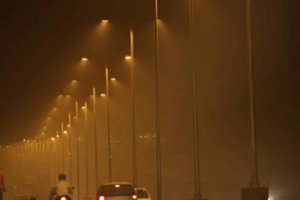
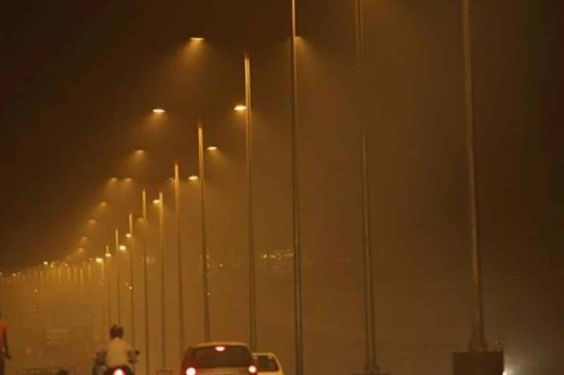
New Delhi: Air quality in the national capital deteriorated sharply as Delhi’s Air Quality Index (AQI) climbed to 389, pushing the city deep into the “Very Poor” category and edging closer to the “Severe” threshold.
The worsening conditions have renewed concerns over public health and environmental management across the National Capital Region (NCR).
According to meteorological assessments, a combination of calm ground-level winds, atmospheric thermal inversion, and the influx of smoke from crop-residue burning in neighbouring states has significantly contributed to the pollution spike.
These conditions have trapped pollutants near the surface, reducing air dispersion and intensifying smog across the capital.
Data from the India Meteorological Department (IMD) indicated that upper-level winds travelling at approximately 23 kmph between 500 and 1,500 metres altitude transported smoke from agricultural fires in Punjab and Haryana toward Delhi.
The rise in stubble-burning incidents has further aggravated the situation.
Reports show 226 active farm fires were recorded recently in Punjab and Haryana, while daily fire detections have nearly doubled within a week.
Satellite observations have identified thousands of farm-fire incidents since the beginning of the harvesting season, with Punjab accounting for the overwhelming majority.
Environmental experts caution that the actual number could be higher, as some fires may occur outside satellite observation windows.
Health experts warn that prolonged exposure to such polluted air can increase respiratory ailments, particularly among children, senior citizens, and individuals with pre-existing lung or heart conditions.
Authorities continue to monitor the situation as weather conditions remain unfavourable for pollutant dispersion.
The latest pollution surge highlights the recurring challenge faced by Delhi each winter, where adverse meteorological conditions and seasonal agricultural burning combine to create hazardous air-quality levels across the region.