








Odisha Unveils India’s First Dedicated Agri-PV Policy, Aiming for 1 GW Capacity by 2030
Bhubaneswar: In a pioneering move to integrate agriculture with renewable energy generation, Odisha has announced India’s first dedicated Agrivoltaics (Agri-PV) Policy 2026, setting an ambitious target of achieving 1 GW of agrivoltaic capacity by 2030.
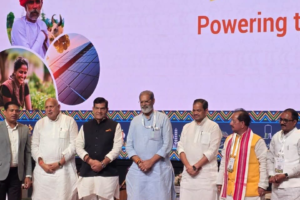
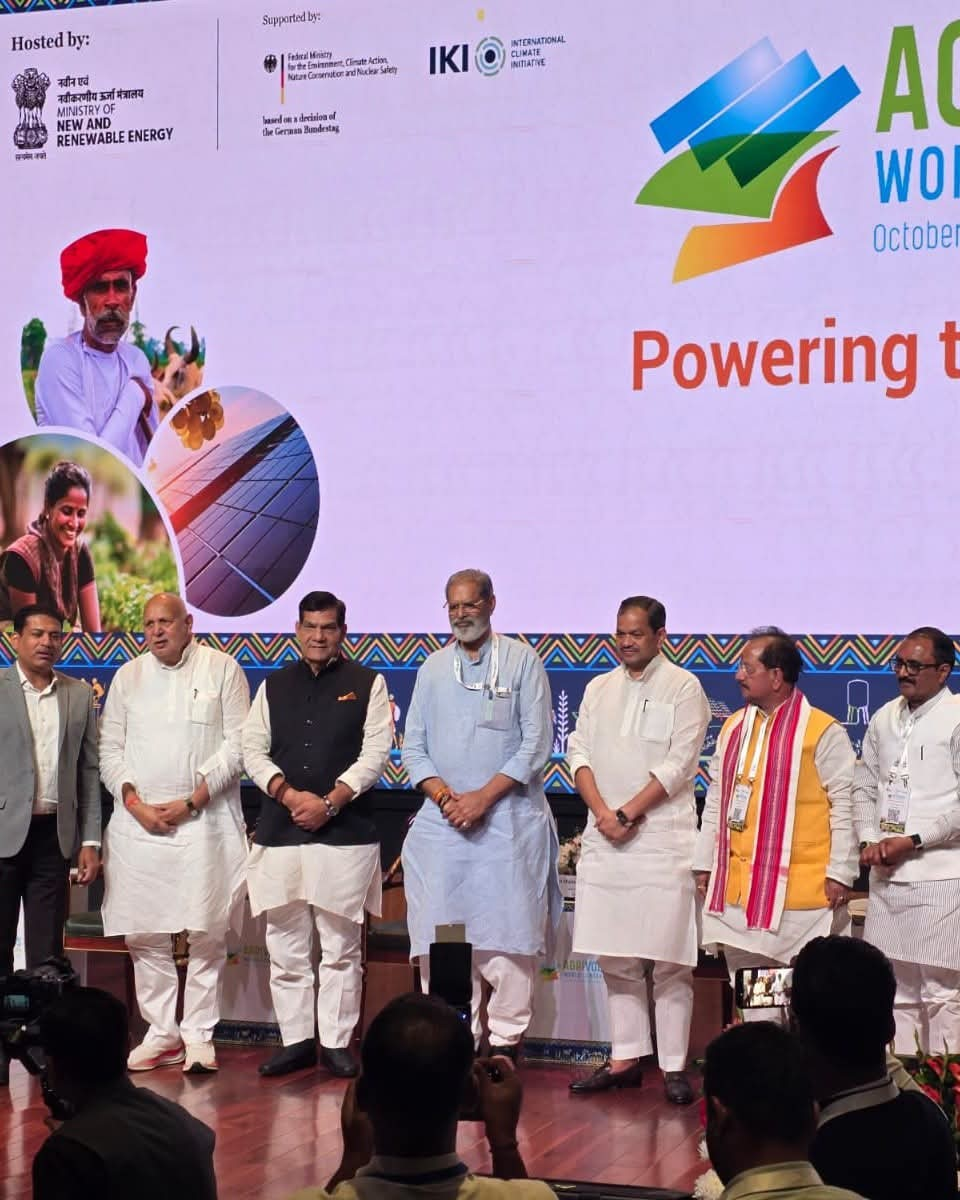
The policy was unveiled during the 7th Agrivoltaics World Conference in New Delhi.
Branded under the vision of “One Field, Two Harvests,” the policy seeks to enable simultaneous agricultural production and solar power generation on the same parcel of land.
The initiative is designed to enhance farmers’ incomes while supporting Odisha’s renewable energy goals.
Deputy Chief Minister and Energy Minister Kanak Vardhan Singh Deo emphasised that the policy places farmers at its core, envisioning a transformation from “Annadata” (food providers) to “Urjadata” (energy providers).
Farmers will be able to either own Agri-PV installations and earn from both crop cultivation and electricity generation or lease their land to developers for a steady long-term income.
To safeguard agricultural productivity, the policy mandates that at least 90 per cent of project land remain under active cultivation.
Agricultural land status and crop insurance eligibility will also be preserved, ensuring that clean energy expansion does not come at the cost of food security.
Beyond additional revenue opportunities, agrivoltaic systems are expected to offer environmental benefits.
Elevated solar panels can help create cooler microclimates, reduce soil moisture loss, and provide protection against extreme weather conditions, improving resilience for farmers facing climate-related challenges.
The state government has also announced a range of investor-friendly measures, including 25-year Power Purchase Agreements (PPAs) through GRIDCO, guaranteed power offtake, grid connectivity support, and open-access provisions.
These incentives are aimed at accelerating private sector participation in Agri-PV projects.
Odisha has already operationalised a 1 MW Agri-PV project and launched a pilot collaboration with Singapore’s Nanyang Technological University, laying the groundwork for wider adoption of the technology.
The state estimates that over 40.7 lakh acres of cropland and 47.7 lakh acres of fallow land hold potential for agrivoltaic development.
With the launch of the dedicated Agri-PV Policy 2026, Odisha aims to position itself as a national leader in sustainable agriculture and renewable energy, creating a dual-income model that could redefine the future of farming in India.