









Odisha Bandh Disrupts Normal Life as INDIA Bloc Stages Statewide Protest; Rail and Road Blockades Reported
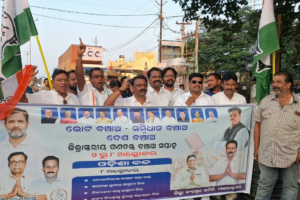
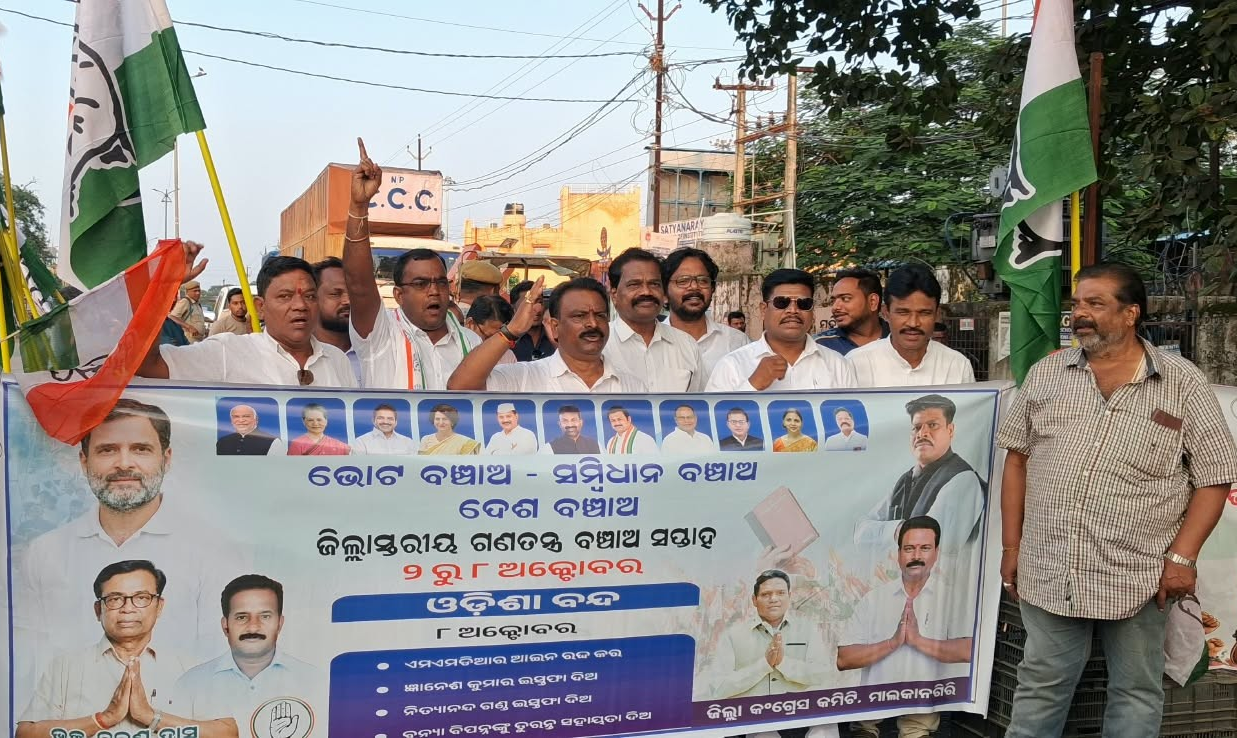
Bhubaneswar: Normal life across Odisha was affected on Thursday as the INDIA bloc, led by the Congress and supported by allied parties, observed a 12-hour statewide bandh, resulting in disruptions to transportation and public movement in several districts.
The protest was organised over multiple issues, including opposition to the Mines and Minerals (Development and Regulation) Amendment Act, alleged inaccuracies in school textbooks, and concerns regarding the Special Intensive Revision (SIR) of electoral rolls.
In the state capital, Bhubaneswar, demonstrators staged road blockades at key locations such as Master Canteen Square and Palasuni Square, causing traffic congestion and affecting commuter services.
Public transport operations were also impacted, with protesters reportedly stopping an Ama Bus and asking passengers to disembark.
Rail services witnessed protest actions as Congress workers and members of the All India Forward Bloc attempted a Rail Roko agitation near Bhubaneswar Railway Station.
However, security personnel, including the Railway Protection Force (RPF) and local police, prevented protesters from accessing railway tracks.
In western Odisha, activists briefly disrupted train operations at Sambalpur Railway Station by halting the Sambalpur-Puri Express, highlighting the statewide reach of the bandh.
The protest also included demands for the resignation of Education Minister Nityanand Gond and Chief Election Commissioner Gyanesh Kumar.
Meanwhile, the opposition Naveen Patnaik-led Biju Janata Dal (BJD) stayed away from the bandh. Party coordinator Lenin Mohanty stated that while the BJD opposes the controversial mining law and textbook issues, it remains equidistant from both the BJP and Congress.
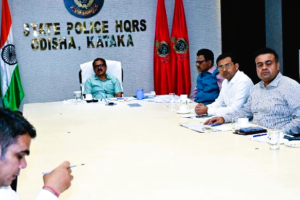
To maintain law and order, authorities deployed around 150 police personnel at sensitive locations in Bhubaneswar and instructed district administrations to ensure uninterrupted functioning of essential services, including hospitals, pharmacies, and emergency response units.
The bandh significantly affected transportation and daily activities in several parts of Odisha, though essential services largely continued to function under police supervision.