


Odisha Targets 5 Lakh Hectares of Millet Cultivation by 2047
Bhubaneswar: Odisha has unveiled an ambitious roadmap to expand millet cultivation to five lakh hectares by 2047, reinforcing its commitment to climate-resilient agriculture, nutritional security, and sustainable rural livelihoods.
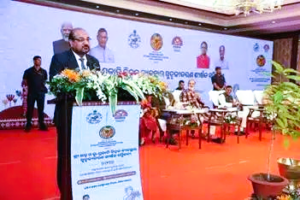
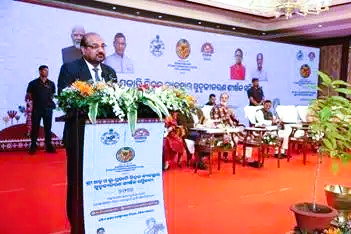
The vision was presented during a national conference on agro-biodiversity, climate-resilient agriculture, and sustainable food systems held in Bhubaneswar.
The state currently cultivates millets on nearly 1.79 lakh hectares and aims to increase production to eight lakh metric tonnes by 2047.
The roadmap aligns with Odisha’s broader strategy to promote millets as a nutritious and climate-smart crop capable of addressing challenges posed by changing weather patterns and degrading soil health.
Addressing the conference, Dr M.L. Jat, Secretary of the Department of Agricultural Research and Education (DARE) and Director General of ICAR, highlighted Odisha’s rich agro-biodiversity and emphasised the importance of indigenous crops in ensuring sustainable food systems.
He described the state’s Shree Anna Abhiyan as a model initiative with the potential for replication across the country.
Odisha’s growing success in millet procurement was also showcased during the event.
The state procured 7.5 lakh quintals of finger millet (ragi) during the 2024-25 marketing season and has set a target of eight lakh quintals for 2025-26.
The roadmap underscores the need to conserve traditional millet varieties and indigenous genetic resources.
Officials highlighted the documentation of 163 finger millet landraces and the promotion of traditional varieties such as Kalia, Bati, Mami and Bharathi.
In addition to finger millet, the state plans to expand cultivation of minor millets including little millet (Suan) and foxtail millet (Kangu).
The strategy also focuses on strengthening Farmer Producer Organisations (FPOs), empowering women-led Self-Help Groups (SHGs), and developing affordable millet-processing technologies to enhance value addition and market access.
A proposal to establish a Centre of Excellence on Millets at Odisha University of Agriculture and Technology (OUAT) was also discussed, aimed at accelerating research, innovation, and capacity building in the millet sector.
With its ambitious targets and integrated approach, Odisha is positioning itself as a national leader in millet promotion while advancing climate resilience, farmer incomes, and nutritional well-being.