








Odisha Partners with Uttarakhand for Cutting-Edge Landslide Risk Management
Bhubaneswar: In a significant step towards strengthening disaster preparedness, Odisha is set to sign a Memorandum of Understanding (MoU) with Uttarakhand to enhance landslide management capabilities and adopt advanced mitigation strategies.
The collaboration between the Odisha State Disaster Management Authority (OSDMA) and the Uttarakhand State Disaster Management Authority (USDMA) aims to facilitate knowledge-sharing, technology transfer, and the adoption of scientific approaches for landslide risk assessment and mitigation.
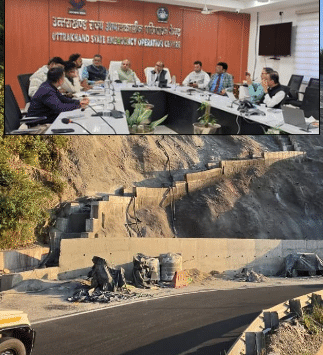
A delegation from OSDMA recently visited Uttarakhand to study the Himalayan state’s successful landslide management framework.
The team examined advanced monitoring systems, early warning mechanisms, slope stabilisation techniques, and geotechnical assessment methods that have helped Uttarakhand tackle recurring landslide threats.
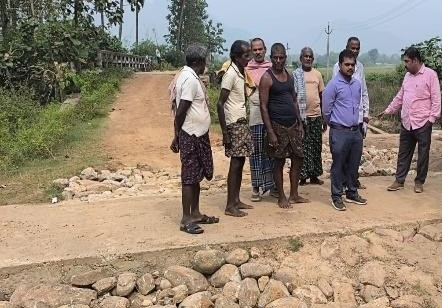
The initiative comes amid growing concerns over landslides in southern Odisha, particularly in districts such as Gajapati, Ganjam, Kandhamal, and Rayagada.
Recent extreme weather events have highlighted the need for robust monitoring systems and long-term mitigation measures in these vulnerable regions.
Under the proposed partnership, Odisha plans to leverage Uttarakhand’s expertise in Geographic Information System (GIS) mapping, satellite-based monitoring, hazard zonation, and debris-flow management.
The collaboration is expected to strengthen the state’s ability to identify high-risk zones and improve early warning dissemination to vulnerable communities.
Revenue and Disaster Management Minister Suresh Pujari emphasised Odisha’s commitment to its “Zero Casualty” disaster management vision.
He stated that the partnership would help the state build a comprehensive and science-driven landslide preparedness framework, reducing risks and enhancing community resilience.
Known globally for its effective cyclone management model, Odisha is now expanding its focus to landslide risk reduction, marking a new chapter in the state’s disaster management strategy.