







Odisha’s Statistical Transformation Sets National Benchmark with World Bank Support
Bhubaneswar, Sept 18, 2025 — In a landmark move, Odisha has emerged as India’s trailblazer in statistical reform, launching a series of transformative initiatives under the World Bank-supported “Strengthening State Statistical System” program.
The reforms are part of the Odisha State Capability and Resilient Growth Programme and aim to align governance with data-driven decision-making.
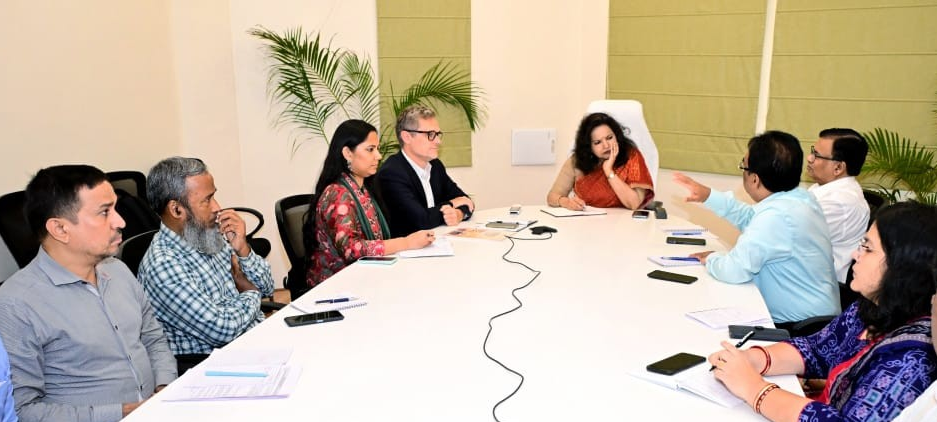
At a high-level meeting chaired by Development Commissioner Smt. Anu Garg, IAS, officials from the Planning & Convergence Department and the Directorate of Economics and Statistics (DE&S) reviewed progress and outlined a bold roadmap for the future. The World Bank Mission Team, led by Mr. Thomas and Ms. Shreya Dutta, presented strategies to elevate Odisha’s statistical infrastructure to global standards.
Odisha is the first Indian state to adopt the Generic Statistical Business Process Model (GSBPM), a globally recognised framework for statistical operations. The state also launched the National Data Archive (NADA), a centralised data repository that democratizes access for citizens, researchers, and policymakers.
Innovations like the Computer-Assisted Personal Interview (CAPI) software are streamlining data collection, while the DE&S is undergoing a digital overhaul to ensure faster, transparent dissemination of statistical outputs.
A new Survey Design & Research Division (SDRD) will conduct scientifically rigorous household surveys, and enhanced District Domestic Product (DDP) estimation will support localised planning.
The reforms extend across departments, beginning with Energy, Tourism, and Housing & Urban Development. DE&S officials will receive international training to adopt global best practices and foster a culture of innovation.
“This is not just about numbers—it’s about narratives that guide governance,” said Smt. Garg emphasised the strategic importance of data in achieving the vision of Viksit Odisha 2036 and 2047.
Odisha’s bold steps position it as a national model for data-driven development, blending technology, transparency, and strategic foresight.