



Odisha CM Mohan Charan Majhi Hails Union Budget 2026-27 as ‘Historic’ for Youth and State Development
Odisha Chief Minister Mohan Charan Majhi has lauded the Union Budget for 2026-27, presented by Finance Minister Nirmala Sitharaman, as a “growth-oriented” and “youth-focused” blueprint that emphasises inclusive development across all sections of society.
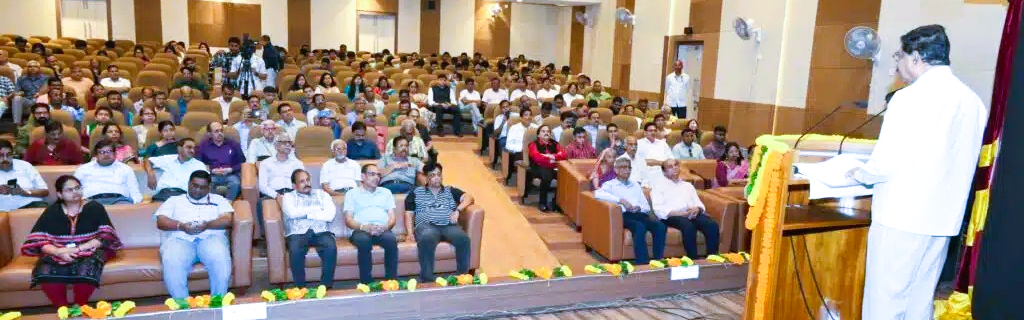
Speaking on the auspicious occasion of Magha Purnima, CM Majhi described the budget as a milestone in India’s economic journey, with special provisions accelerating Odisha’s progress toward a developed India.
The budget, Sitharaman’s ninth consecutive one, shifts from ambiguity to clear implementation, prioritising skill enhancement for the youth to compete globally. “This will instil self-confidence in our young population and enable them to contribute significantly to national development,” Majhi said, terming it a “youth empowerment budget.”
Highlighting the Modi government’s reforms, Majhi noted that over 350 structural changes have been implemented since independence, propelling India toward self-reliance and a ‘Viksit Bharat’ (Developed India).
The budget allocates Rs 12.2 lakh crore for capital expenditure (CAPEX), with increased focus on infrastructure.
Majhi expressed gratitude to the central government for Odisha-specific initiatives, which he believes will boost the state’s economy, tourism, and sustainability:
1. *Rare-Earth Corridor in Odisha*: A dedicated corridor for mining, processing, research, and production of rare minerals to reduce import dependency, promote local industries, and support high-tech sectors like electronics and renewable energy.
2. *Eastern Coastal Development Corridor*: Incorporating tourism and economic hubs along the eastern coast, benefiting Odisha’s strategic location.
This includes developing five tourism destinations in ‘Purvodaya’ states (Bihar, Jharkhand, West Bengal, Odisha, and Andhra Pradesh) and providing 4,000 e-buses for public transport.
3. *National Waterways Expansion*: Operationalising 20 new waterways over five years, with Phase 1 of NW-5 connecting mineral-rich areas like Talcher and Angul to industrial and port hubs in Paradip and Dhamra.
This aims to enhance efficient, cost-effective cargo transport, reducing logistics pressure on roads and railways, and strengthening Odisha as a logistics and industrial hub on the eastern coast.
4. *City Economic Regions (CERs)*: New urban-managed economic growth zones, with Rs 5,000 crore per CER over five years.
These will integrate infrastructure, services, and investments to boost the urban and surrounding areas’ potential, supporting the proposed Bhubaneswar-Cuttack-Paradip-Puri urban corridor.
5. *Turtle Trails for Eco-Tourism*: Developing trails near major turtle nesting sites in states like Odisha, Karnataka, and Kerala to promote wildlife tourism and environmental conservation, focusing on nature-based infrastructure.
6. *Revamped Rural Employment Scheme*: Transforming MGNREGA into ‘Viksit Bharat – Rozgar Guarantee O Aajeevika (Gramin)’ (VB-G RAM G), guaranteeing 125 days of employment per rural household (up from 100 days).
With a 60:40 Centre-State funding ratio, the Centre’s share for 2026-27 is estimated at Rs 95,692 crore out of Rs 1.51 lakh crore total.
Transitional allocations include Rs 30,000 crore for the old scheme and Rs 95,692 crore for the new one.
7. *High-Value Agriculture Initiatives*: Schemes for coconut, cashew, and sandalwood in coastal states like Odisha to boost farmers’ income, productivity, and rural employment.
A coconut promotion plan targets major producing states, including replacing old trees with high-yield varieties.
8. *National Critical Mineral Mission (NCMM)*: Rs 34,300 crore over seven years for securing minerals like lithium, including Rs 16,300 crore for value chains, new Rare-Earth Corridors in four states, and Rs 35,000 crore incentives for coal gasification.
The budget also increases allocations for key centrally sponsored schemes compared to the previous year, such as:
– Krishi Unnati Yojana (Rs 11,200 crore)
– Jal Jeevan Mission (Rs 67,670 crore)
– VB-G RAM G Scheme (Rs 95,692 crore)
– Samagra Shiksha (Rs 42,100 crore)
– PMAY Urban (Rs 18,625 crore)
– PMAY Rural (Rs 54,917 crore)
– National Health Mission (Rs 31,820 crore)
– National Rural Livelihood Mission (Rs 19,200 crore)
For central sector schemes:
– PM Kisan (Rs 63,500 crore)
– PM Garib Kalyan Anna Yojana (Rs 2,27,429 crore)
– PM Suryaghar Muft Bijli Yojana (Rs 22,000 crore)
– PM Viksit Bharat Rozgar Yojana (Rs 20,083 crore)
New initiatives announced include:
– VB-G RAM G Scheme (Rs 95,692 crore)
– PM Setu (Rs 6,141 crore)
– Allied Health Professionals Scheme (Rs 1,000 crore)
– Electronics Hardware Manufacturing Scheme (Rs 40,000 crore over 5 years)
– Bio-Pharma Empowerment (Rs 10,000 crore over 5 years)
– Chemical Parks (Rs 600 crore)
– Infrastructure Risk Guarantee Fund (Rs 1,000 crore)
– MSME Development Fund (Rs 500 crore)
Majhi affirmed that these provisions will aid Odisha in achieving its goals of prosperity and contribute to a developed India. “From every perspective, this is a historic budget,” he said.
During the press meet in Sonepur, responding to media queries, Majhi outlined the state’s industrial push: focusing on 16 sectors, establishing industries across all districts based on local potential.
In districts like Balangir, Kalahandi, and Subarnapur with high cotton cultivation, textile units are prioritised.