






Nobel Laureate Michael Kremer advocates AI-based forecasting to tackle pest incidence
Bhubaneswar, Aug 30 (UNI) Nobel Laureate Prof. Michael Kremer today recommended the use of Artificial Intelligence (AI)-based forecasting that considers rainfall, temperature and humidity to better predict pest outbreaks.
He said such forecasting would enable farmers to adopt precautionary and preventive measures, thereby safeguarding crops from abnormal weather conditions.
Prof. Kremer stressed the importance of integrating multiple weather forecasting models with the existing Krushi Samruddhi Helpline (KSH) system of the Department of Agriculture and Farmers’ Empowerment (DA&FE).
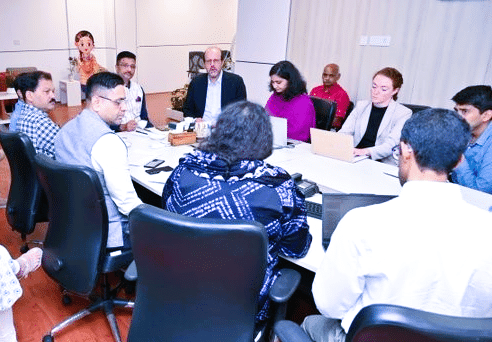
He, along with a 12-member team from the University of Chicago, visited Krushi Bhavan to discuss their ongoing research project on weather forecast dissemination systems and their rationality, validity, and acceptance among Odisha’s farming community.
During a meeting with Agriculture Secretary Arabinda Padhee and senior departmental officials, Prof. Kremer appreciated the KSH initiative, noting its significant role in assisting the last-mile
farmers to protect crops from climate-induced risks.
Padhee, in turn, highlighted the Department’s holistic strategies, including Comprehensive Rice Fallow Management to enrich soil biomass, crop insurance, customised agro-advisories, digital
crop surveys, the Krushak Odisha database, adoption of stress-tolerant crop varieties, and digital
pest monitoring.
He also referred to the contingency plan prepared with OUAT to mitigate the adverse effects of weather aberrations.
Prof. Kremer lauded these initiatives and expressed interest in building a meaningful partnership for mutual knowledge and expertise sharing.
The meeting was attended by Shubham Saxena, Director of Agriculture and Food Production; Subrat Kumar Panda, Director of Soil Conservation and Watershed Development; the Additional Secretary; senior departmental officers; scientists from OUAT; and members of the Climate Resilience Cell.